Thailand Sewage Treatment Equipment Selection Guide: Recommended Intelligent Integrated Systems and Sludge Dewatering Equipment
- release date: 2026-03-16 14:53:39
- author: Hongtai Huairui
- Reading: 1105
- key words: Thailand Wastewater Treatment Equipment/Intelligent Integrated Wastewater Treatment Equipment/Sludge Dewatering Equipment/FyhoneOS/Rural Wastewater Treatment in Thailand /Food Processing Wastewater in Thailand
According to data from Thailand’s Ministry of Natural Resources and Environment, the current national wastewater treatment rate is about 52%. The residential sector’s wastewater treatment efficiency is only 18%, while the agricultural sector discharges up to 39 million cubic meters of wastewater per day. The Thai government has clearly stipulated that by 2027, the coverage rate of wastewater treatment plants nationwide must reach 100%. In accordance with the “Enhancement and Conservation of National Environmental Quality Act,” approximately 20,000 highly polluting factories are subject to mandatory compliance rectification. Meanwhile, about 80% of water treatment equipment relies on imports, and market demand continues to grow for equipment that offers both competitive pricing and localized services.
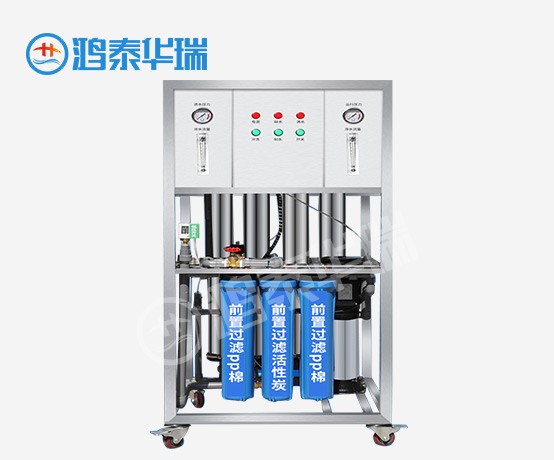
- Intelligent Integrated Sewage Treatment Equipment (Equipped with the Fyhone AI System)
Applicable Scenarios
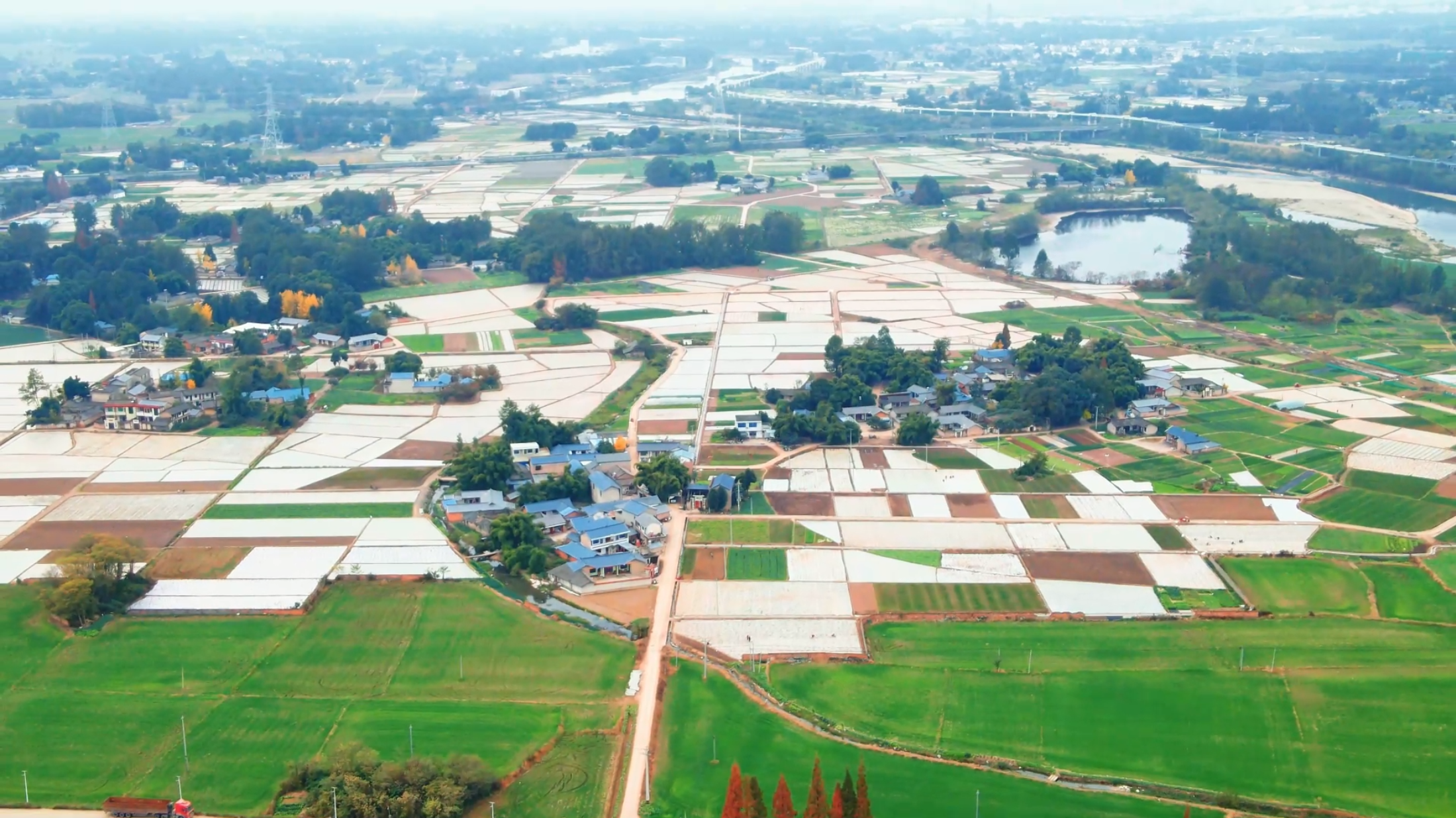
Suitable for rural communities in Thailand, small and medium-sized food processing plants, agricultural breeding bases, and residential areas (residential communities with more than 500 households are legally required to build their own treatment facilities).
Core Product Advantages
Rapid delivery, operational within 15 days
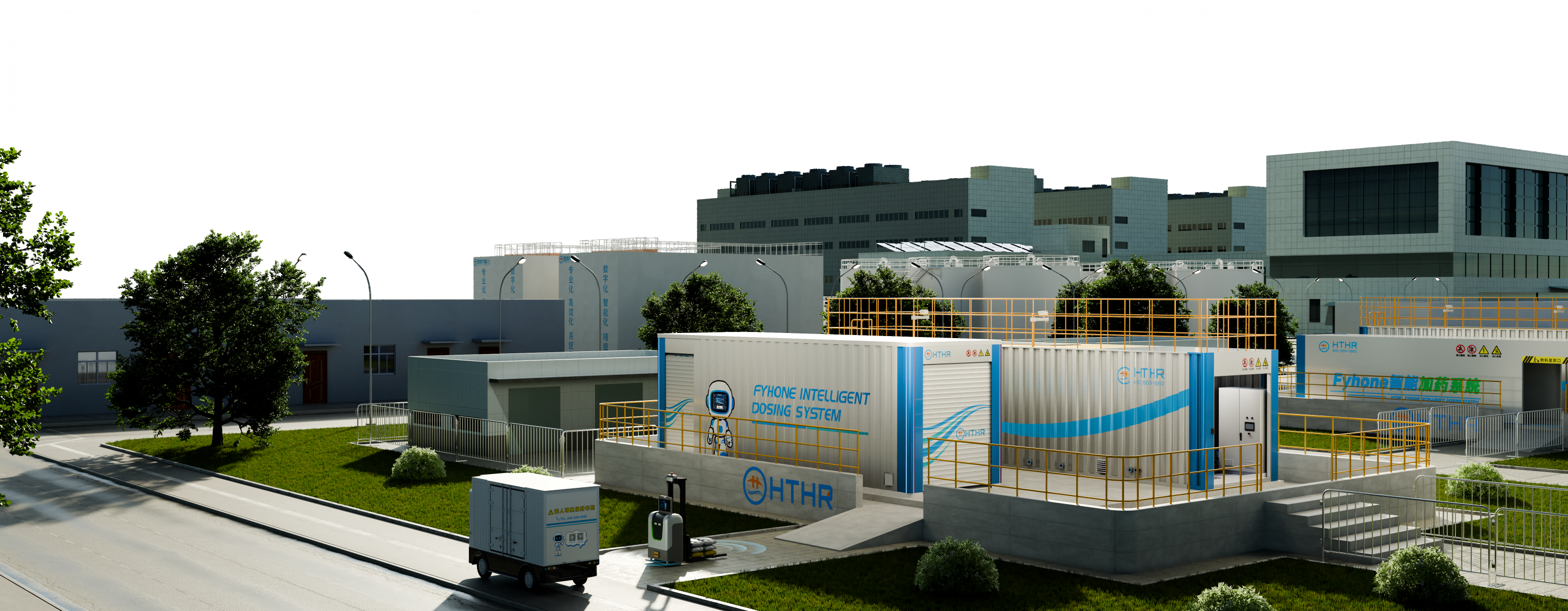
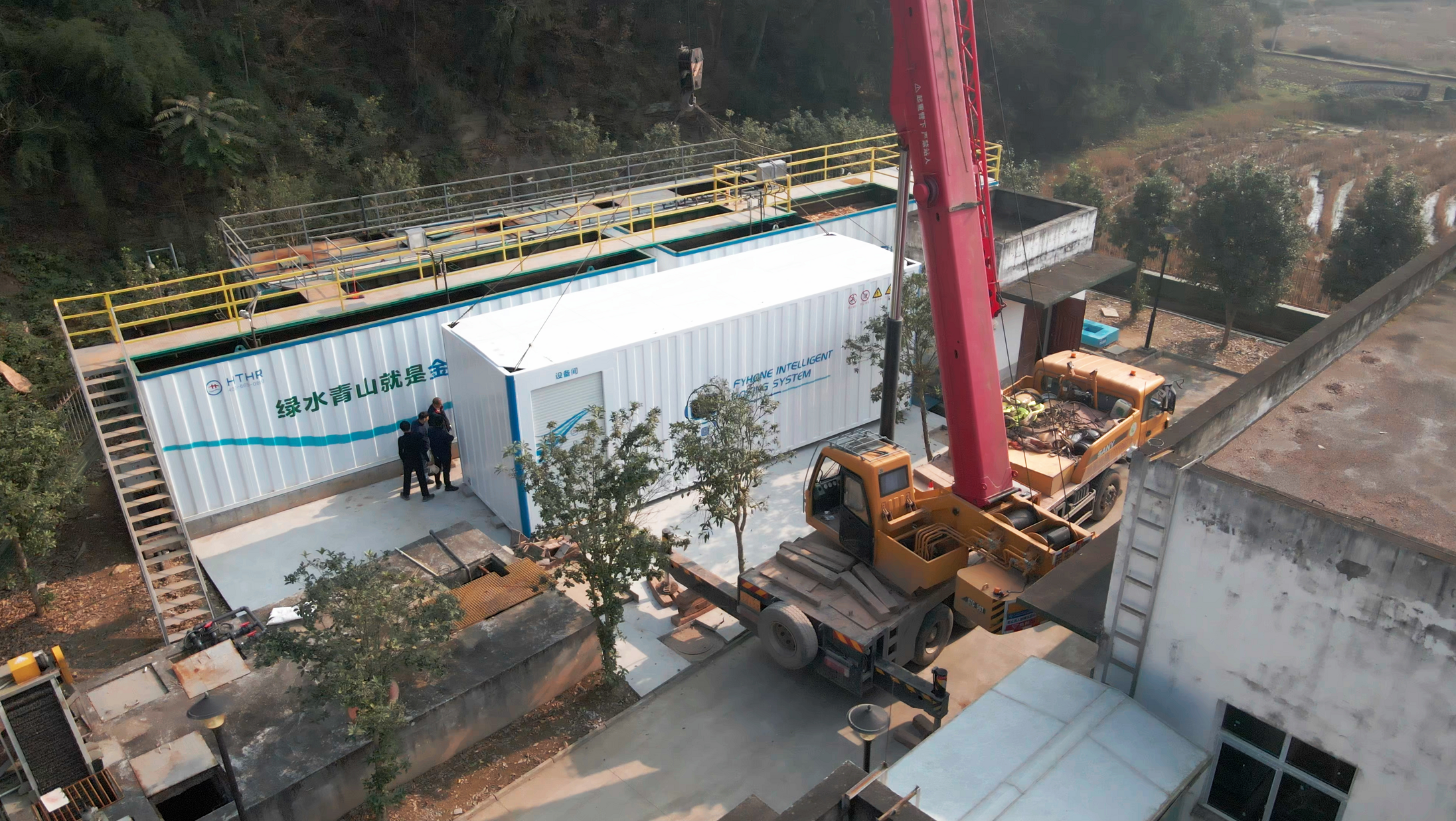
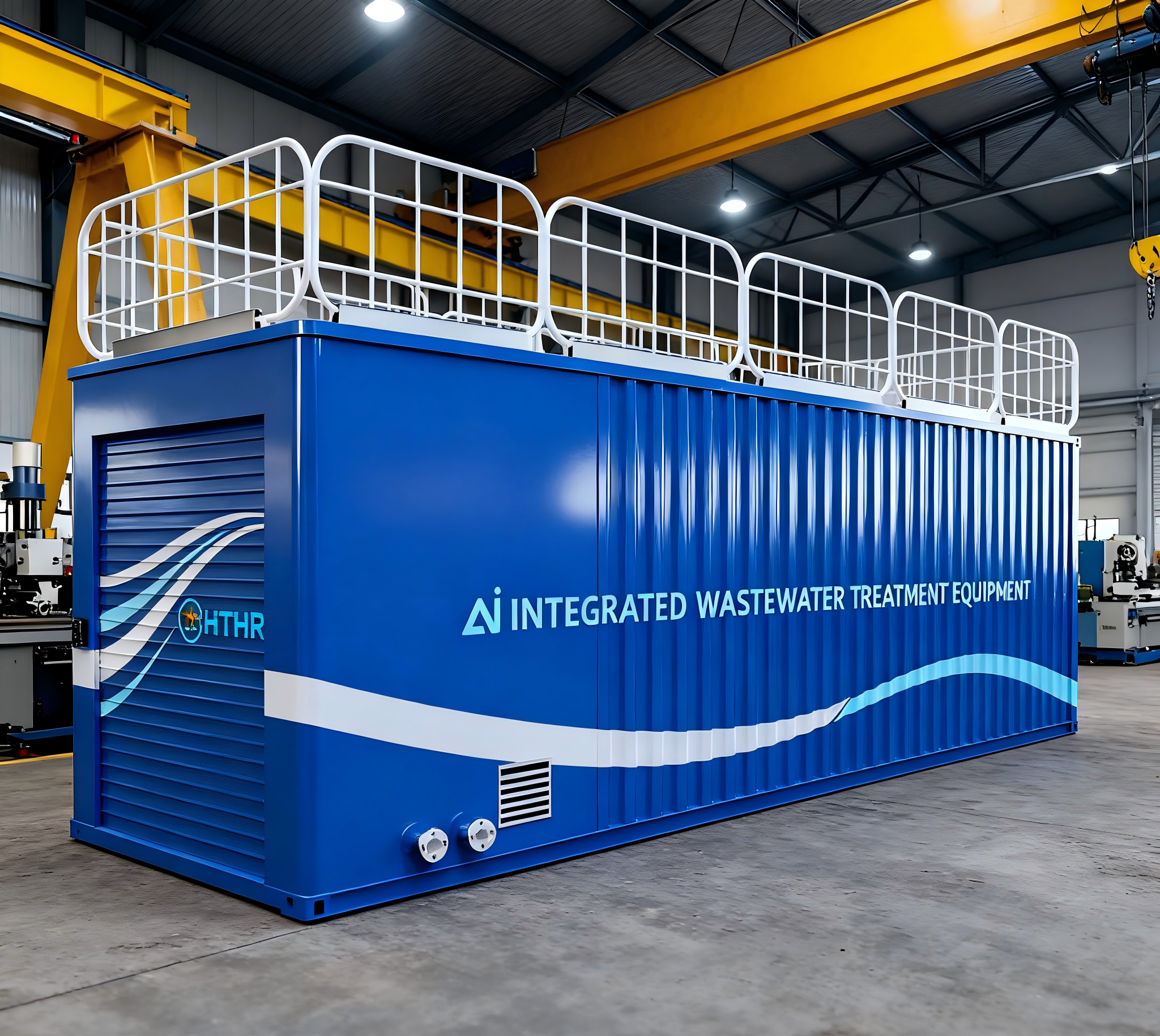
The equipment adopts a factory-prefabricated, complete-unit delivery model. The regulating tank, biochemical treatment unit, secondary sedimentation tank, and disinfection module are all integrated into a standardized steel-structure container. After arriving on site, only pipeline connection and power commissioning are required, enabling operation in as little as 15 days. Compared with the months-long civil construction period of traditional sewage treatment stations, this significantly reduces on-site construction costs and schedule risks, particularly aligning with the Thai government’s 2027 nationwide coverage target.
FyhoneOS AI system solves the shortage of operation and maintenance personnel
The equipment includes the Fyhone artificial intelligence control system, which collects multidimensional operational parameters in real time, such as influent and effluent water quality, aeration volume, and sludge concentration. The algorithm autonomously adjusts operating conditions to maintain stable treatment efficiency in Thailand’s high-temperature, high-humidity environment with significant load fluctuations. The supporting Fyhone AI remote monitoring platform is integrated simultaneously, allowing managers to monitor multi-site operational status and abnormal alerts in real time through mobile devices. This truly enables low-staff or unattended operation, effectively addressing the long-term shortage of professional water utility operation and maintenance personnel in Thailand.
Localized adaptation
Process presets are optimized for typical wastewater characteristics in Thailand, such as agricultural tailwater and food processing wastewater, and a Thai-language operating interface is provided.
Policy Compliance Explanation
According to Thailand’s “Enhancement and Conservation of National Environmental Quality Act,” buildings with more than 500 households and hotels with more than 200 guest rooms are required to construct their own wastewater treatment facilities. The Thailand Board of Investment (BOI) provides corporate income tax reductions and land-use incentives for environmental water projects, and supports BOT and PPP cooperation models, offering a feasible compliance pathway for small and medium-sized enterprises with limited funding.
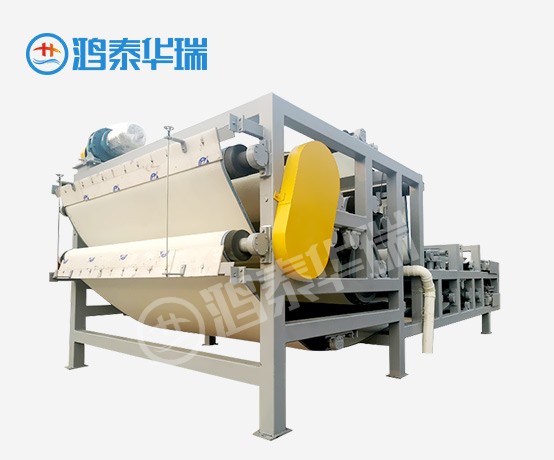
Sludge Dewatering Treatment Equipment
- Sludge Dewatering Treatment Equipment
Applicable Scenarios
Suitable for sludge reduction at wastewater treatment plants in Thai tourist cities such as Phuket, Pattaya, and Chiang Mai, as well as compliant disposal of high-moisture sludge in industrial parks.
Core Product Advantages
- High cost-performance, significantly reduced costs
Relying on large-scale external procurement channels, the equipment purchase price is 30%–40% lower than comparable imported models, fitting the budgets of small and medium-sized wastewater treatment stations and addressing limited funding challenges.
- Fast shipment from stock, efficient delivery
Standard models are kept in stock. The fastest delivery time from order to shipment is 15 days, meeting urgent needs such as installation before peak tourist seasons or emergency capacity expansion.
- Significant volume reduction, measurable cost savings
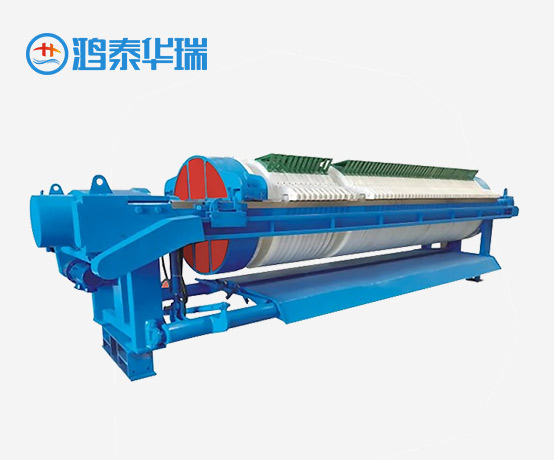
Using a high-pressure filter-press process, sludge moisture content is reduced from 98% to below 65%, shrinking the volume by more than 80%. Taking a medium-sized wastewater plant in Phuket as an example, the reduced volume can greatly lower transportation and landfill costs, producing quantifiable savings.
- Fully enclosed design suitable for scenic area standards
The fully enclosed filtration chamber strictly controls odor diffusion, meeting environmental requirements for tourist areas. Automated unloading reduces manual contact and lowers operation and maintenance intensity, fitting streamlined operation models.
Policy Compliance Explanation
Thailand’s Department of Industrial Works continues to strengthen enforcement of industrial wastewater discharge regulations. Non-compliant landfill disposal of high-moisture sludge faces increased penalties. Introducing sludge dewatering equipment not only meets mandatory compliance requirements but is also a proactive choice for industrial parks and tourist cities to control long-term operational costs.
If you would like to obtain product specifications or a project quotation, please feel free to contact us.





 hthrjt2017@gmail.com