



 hthrjt2017@gmail.com
Design of wastewater treatment station for a chemical plant in Guizhou
- release date: 2022-08-29 19:32:00
- author: Hongtai Huairui
- Reading: 4943
key words: Guizhou, chemical plant, domestic sewage, production wastewater
Hongtai Huarui Technology Group welcomes your visit. We have been dedicated to the environmental protection and governance industry for over a decade! We look forward to a cooperation with you!


+86 19102876179 +86 400-669-0860
key words: Guizhou, chemical plant, domestic sewage, production wastewater
project overview
Relying on Guizhou's rich coal resources, the chemical plant vigorously develops the coal chemical industry, with deep processing of coal as its main industrial chain. Traditional coal chemical industry is a high-energy, high-emissions, high-pollution, and low-efficiency industry dominated by low-tech and low-value-added products. With the development of the market and the advancement of science and technology, this unsustainable development method that excessively consumes resources, seriously pollutes the environment, and is extensive has become unsustainable. Therefore, the company plans to adopt advanced pulverized coal pressurized gasification technology and plans to build a plant with an annual output of 300,000 tons of synthetic ammonia and 150,000 tons of dimethyl ether to provide clean energy monomethyl ether to the market. After the project is completed, it is expected that the total amount of domestic sewage and production wastewater will reach 1200m³/h. The production wastewater of the synthetic ammonia process using coal as raw material is mainly coal-making gas-containing wastewater and copper-washed dilute ammonia water. In order to ensure that wastewater can meet the discharge standards, the company plans to build a new water treatment station, and the treated effluent will meet the first-level B emission standard of the Comprehensive Sewage Discharge Standard (GB8978-1996). The treatment station has a total area of 1500m2, a total installed capacity of 166.2kw, and an operating cost of approximately 1.26 yuan/m3wastewater (excluding depreciation).
Design basis
(1) Various relevant basic information provided by the owner (water quality, water quantity, reuse water requirements, etc.);
(2) On-site survey data:
(3) "Comprehensive Sewage Discharge Standard" (GB8978-1996);
(4) The spirit of relevant national, provincial and regional regulations, regulations and documents
(5) Other relevant design codes and standards.
Design principles
(1) According to the characteristics of wastewater quality of this project, the wastewater treatment process with advanced and reliable technology, mature and stable technology, high treatment efficiency, small land area, low operating cost and convenient operation and management is selected to ensure that the effluent is discharged up to standard and save investment:
(2) Choose equipment with reliable quality, easy maintenance and low energy consumption to reduce the operating cost of the treatment system as much as possible:
(3) Take measures to minimize the impact of the wastewater treatment system on the surrounding environment, reasonably control noise and odor, properly treat and dispose of solid waste, and avoid secondary pollution;
(4) The general layout is reasonable, compact and beautiful, reducing the number of wastewater lifting in the wastewater treatment station and ensuring the stable and reliable operation of the wastewater treatment process.
Source of pollution
The source of wastewater from the project is the production wastewater of the new production plant and the domestic sewage of the plant. According to the results of the new production line to be built by the enterprise and the analogy survey results of the same type of production enterprise, the process process of the ammonia synthesis enterprise using coal as raw material can be roughly divided into four parts: the preparation of raw gas, the purification of raw gas, gas compression and ammonia synthesis, and the wastewater is mainly produced in the preparation and purification of raw gas.
(1) Wastewater generated by raw gas preparation technology
The preparation of ammonia raw gas is a series of heterogeneous chemical reactions between coal or coke and gasifiers (such as air, steam, oxygen, etc.) to produce CO and H2、CO2and CH4and other basic components. However, in addition to C, coal also contains S, O, N and other elements, so gas also contains H2S, HCN, and unreacted coal chips. Since the gas coming out of the gas furnace contains the above gases and impurities, the gas temperature is also high, so it must be cooled and washed before it can enter the next process. This is unavoidable in any gas production method, and the detergent and cooling medium are generally water. Therefore, a sewage with high temperature, dark color, and a large amount of coal chips and cyanide is produced. Due to the high concentration of cyanide in these compounds and highly toxic, this wastewater is generally called gas-producing cyanide-containing wastewater.
(2) Water pollution caused by raw gas purification
The purification of synthetic ammonia raw gas mainly includes the removal of sulfide and CO2The removal of CO, the removal of CO and the transformation of CO. Most of the commonly used methods do not use ammonia as an alkali source, so the pollution of ammonia nitrogen to the water environment is excluded. The removal of CO pollution is serious in the copper washing process.
Copper wash regeneration produces NH content3, CO and CO2The production of washing and renewable gas. The copper washing regeneration gas is washed with water to produce copper washing dilute ammonia, and its concentration varies depending on the washing technology used. In addition to ammonia, this wastewater also contains CO2Therefore, the general concentration method will be unable to be treated due to the easy formation of ammonium carbide and pipeline blockage. Therefore, one method is to use copper washing recycled ammonia to directly vent; The other is the discharge of copper washing dilute ammonia.
To sum up, the wastewater discharged from the production workshop of the plant is mainly cyanide-containing wastewater and copper washing dilute ammonia.
Processing technology
The wastewater treatment process mainly includes pretreatment system, biochemical treatment system, oxygen supply system and sludge treatment system, and the process flow is detailed in Figure 2.
4.2 Description of the process flow
The wastewater of the plant is composed of coal gasification wastewater, conversion wastewater, acid gas removal wastewater and domestic wastewater discharged from the living area, and adopts the method of separation treatment.
Firstly, the gasified wastewater and converted water are treated with ammonia nitrogen, and the effluent after ammonia nitrogen treatment is mixed with the acid gas removal water into the neutralization tank, where the pH value is adjusted. The effluent from the neutralization tank undergoes a cyanide breaking reaction to remove cyanide, and the effluent after cyanide removal enters the comprehensive conditioning tank together with other wastewater. According to relevant information, the production sewage temperature of the ammonia industry is 50 o C, and a large amount of heat will be generated when the agent is added in the previous reaction, which will raise the water temperature and be unfavorable to the subsequent biochemical treatment, so a cooling tower is added after the cyanide breaking reaction tank to reduce the wastewater temperature to 20 o C, and then lifted to the AO system for biochemical treatment by the lifting pump to remove most of the pollutants, and finally the precipitated effluent has reached the discharge standard. Because the builder considers reuse, a filtration process is added, and the filtered effluent enters the reclaimed water reuse tank, which provides filtered backwash water
The whole process mainly includes pretreatment system, biochemical treatment system, oxygen supply system, and sludge treatment system. The following is a description of each system.
(1) Pretreatment system
In the first step, the chemical precipitation method was used to remove ammonia nitrogen from coal gasification wastewater and water with high concentration of ammonia nitrogen.
Chemical precipitation nitrogen removal can treat various high-concentration ammonia nitrogen wastewater, and the denitrification efficiency can reach more than 90%. Although the dosage of the precipitant is large, it uses a high-efficiency, low-cost, and non-polluting precipitant for water, which can be eliminated in subsequent biochemical treatment. The denitrification agent in this project uses Mg2+and PO43-,Mg2+MgCl can be used2、Mgo、Mg(NO3)2etc., Po43-, can use H3PO4
Or use NaH, PO, and NaHPO. 12H0 et al., the compound salt MgNHPO produced or dissolved in the wastewater is MgNHPO, +6H0 (MAP for short) as a precipitate (its solubility is only 0.023g/00mol at 0C). Thus, the purpose of removing argon cylinders from wastewater is achieved. MpNLPO, +6H0, commonly known as bird stone, has a degree product of 2.510, and its nutrient content is different from other soluble products, so it can be called as a fertilizer, compost and garden soil, or as an additive for dry square mud, a flame retardant for structural products, etc. Attention should be paid to controlling the pH value during the dosing process. Because when the pH value is 10, the ammonia volatilizes after about 300 seconds of precipitation
The rate reaches 20%. Therefore, the sedimentation time should be shortened as much as possible during the treatment process, and the appropriate pH value should be held to reduce the volatilization and loss of ammonia. When using MgC], NaH, and PO as dosing needles, the optimal pH value is 85~9. When the pH value is greater than 9, the solubility of MAP does not change much: but when the H value is 105~12, solid ammonia will be released from MAP to form insoluble Mg (P0).
Step 2. The anterior effluent and acid gas removal water were treated by the oxidative decomposition method of oxygen machine, and the treatment process was divided into two stages. The wastewater first passes through the neutralization tank, mixes the hazardous gas tax water and the alkaline tax rat water, and then adds sodium oxide and secondary gas acid. When pM310 or higher is maintained in a treatment oil, the following reverse seat occurs:
NuCN+NzCIO-+NaCNO+NaCI
If the pH < 10, the following reactions occur:
HCN+NaCIOCNC1T+NuOH
It can be seen from the above formula. When the pH < 10, the reaction generates chlorinated rat gas, which is very dangerous. Therefore, during this process, the pH value should be controlled above 10.
In addition, in this process, the wastewater is stirred to ensure that the reaction is sufficient and rapid, and in order to strictly control the reaction process and conditions, consider setting up pH meters, ORP sensors and self-controlled dosing devices.
The second stage reaction is different from the first stage. It is advisable to control the pH value at about 8. The reaction process is slower than a period of time, and the following reactions are carried out:
2NuCN+3NCIO+H,O-+CO,+N,+2NaOH+3NaCI
(2) Biochemical treatment system
The biochemical treatment system includes an anoxic tank, an aerobic tank, a biological contact oxidation tank, and a secondary sedimentation tank.
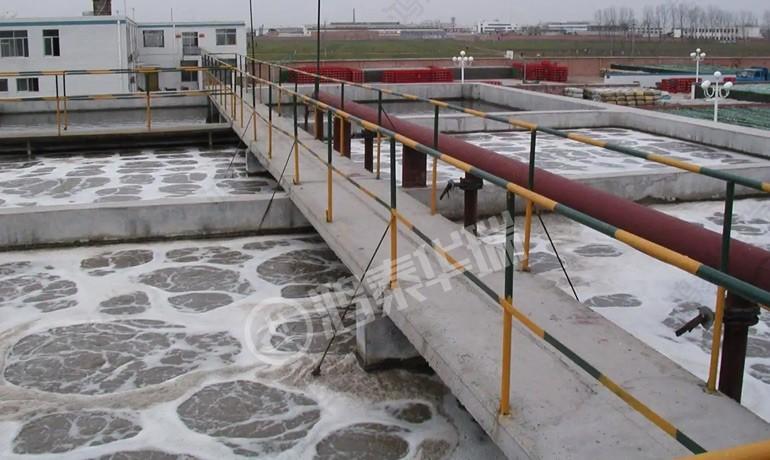
The wastewater is cooled by the integrated conditioning tank into the cooling tower. The cooled wastewater enters the biochemical treatment system. The biochemical system adopts the A/O biological mouse removal process. The wastewater first enters the anoxic tank to remove some COD, BOD, SS, etc., and then enters the aerobic tank. The aerobic tank is composed of several parts, such as the tank body, the water distribution device and the air climbing system, and the fouling is said to be in full contact with the red dye substance in the aerobic tank to achieve the ultimate goal of biodegradation.
(3) Oxygen supply system
The air slaughter in the aerobic tank is blasted air, which is to press the air and send it into the reactor for diffusion and release, so that the oxygen in the air is transmitted into the sewage. This method is suitable for large reactors in Dongshen, which improves the oxygen transfer process and can improve the oxygen supply efficiency. At the same time, an advanced microporous gas system is used to select air into the water by setting up a microporous cyanide device under dry water to realize the oxygen supply process.
(4) Sludge treatment system
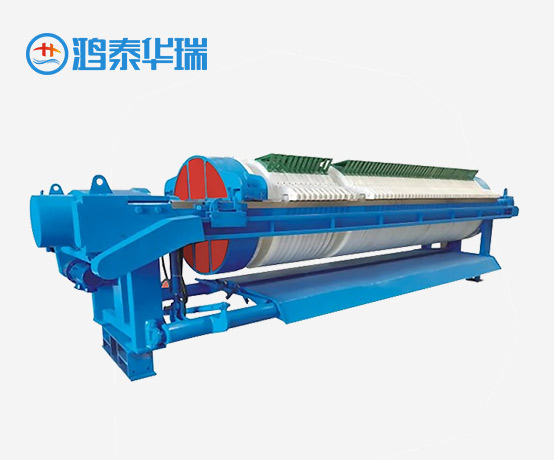
The excess sludge of the biochemical treatment system is taken into the sludge land, and after the sludge is concentrated into a small amount of mud, the water is further removed by the plate filter press, and the dry solids content after dehydration reaches 25%~30%, which can be directly transported out for landfill disposal. The supernatant and dewatered filtrate of the sludge shrinkage tank are returned to the conditioning tank for retreatment
Handling indicators
According to the analysis of wastewater sources, the main pollutants of the wastewater generated by this project are suspended solids, COD, BOD, petroleum, sulfide, chloride, and ammonia nitrogen. At the same time, according to the information provided by the builder, the wastewater discharge will reach 120m3/h, the wastewater discharge and specific water quality of the whole plant are shown in Table 1
Table 1 List of wastewater discharge and water quality of the whole plant
|
serial number |
Device name |
Drainage regularity |
Displacement (m3/h) |
Drainage water quality/(m/gL) |
|||||
|
CN- |
BOD5 |
SS |
COD |
Ammonia nitrogen |
phosphate |
||||
|
l |
Coal gasification |
coiled |
21.2/51 |
10 |
200 |
50 |
300 |
200 |
|
|
2 |
Acid gas removal |
coiled |
4.5/5 |
50 |
1000 |
|
1500 |
|
|
|
3 |
Methanol Plant |
|
7.6 |
|
500 |
|
600 |
|
|
|
4 |
transform |
|
0.2/2 |
|
|
|
|
1500 |
|
|
s |
Domestic wastewater |
discontinuity |
10 |
|
|
150 |
200 |
30 |
3 |
|
6 |
Drainage from thermal power stations |
coiled |
20 |
|
|
|
|
|
1.2 |
|
Combine it |
63.5/95.6 |
|
|
|
|
|
|
||
According to Table 1, the total amount of production wastewater taken from the new plant is 85.6m3/h domestic wastewater is 10m3/h, the total water volume is 95.6m3/h。 Considering the initial rainwater treatment volume, the design scale of the wastewater treatment station is set at 120m3/h。
Influent water quality
The design influent water quality indicators are shown in Table 2.
Table 2 Design wastewater influent water quality
|
project |
COD/(mg/L) |
BOD/ (mg/L) |
pH |
SS/ (mg/L) |
Cyanide/ (mg/L) |
NH3-N/ (mg/L) |
Sulfide/(mg/L) |
|
Influent water quality |
≤300 |
_ |
6.0~9.0 |
≤150 |
≤1.0 |
≤150 |
_ |
The quality of the effluent
According to the characteristics of production wastewater and domestic wastewater, pretreatment measures are taken respectively, and advanced cyanide decyanide treatment of cyanide-containing wastewater from acid gas escape devices and coal gasification units is mixed, and then mixed with other sewage for biochemical treatment. Considering its water quality, the effluent meets the requirements of Level 1B of the Comprehensive Sewage Discharge Standard (GB8978-1996), as shown in Table 3.
Table 3 Design wastewater effluent quality
|
project |
COD/(mg/L) |
BOD/ (mg/L) |
pH |
SS/ (mg/L) |
Cyanide/ (mg/L) |
NH3-N/ (mg/L) |
Sulfide/(mg/L) |
|
The quality of the effluent |
≤100 |
≤30 |
6.0~9.0 |
≤60 |
≤0.5 |
≤15 |
0.5 |
Previous Article:Process design case of organic waste gas...
Next Article:Engineering example of fiber mat activat...

Environmental Protection Information

Recommended Products